The art of Noh.
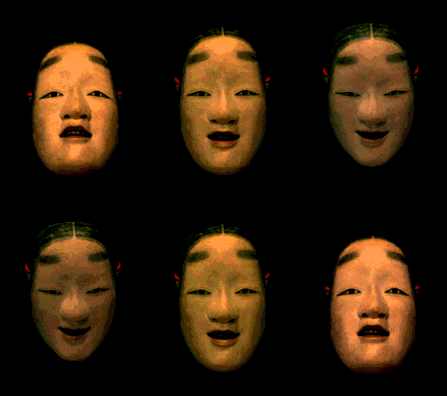 Just as there are a number of different forms of theatre in the west (opera, ballet, drama, vaudeville, etc.) so there are several forms in Japan (Kabuki, Kyogen, Shimpa, etc). One of these, the Noh theatre, has a place in Japanese society that bears some analogies to the place Shakespearian drama has in the West world. Noh theatre dates back to some two hundred years before Shakespeare (XIV century). It also has a wider repertoire (about 240 pieces, compared with 38 for Shakespeare). A distinctive feature of Noh is the use of fans and wooden masks, which are said to change expression according to the inclination they are worn with (see animation…although you cannot really catch the slight shift from one expression and another!).
Dramas and their stories are well known in Japanese tradition and they are in the archaic language of the time they were composed. They are based on ancient myths and legends. Only male actors used to perform Noh plays until more recent times. Still…these are not theatre plays as we might conceive them: no recitation, no sceneries etc. It’s a combination of chants, rhythmic music and dance. A Japanese pine tree painted at the back of the stage, signifies the Kami (god) on stage. I recently attended a Noh theatre workshop at Georgetown College (KY), about 20 mins north of Lexington. I cannot say how much such experience gripped me and how much my westerner’s perspective changed between the first time I saw a Noh demonstration and when I actually had to do it. Three certified Noh instructors came from the Kanze schools in Kyoto to teach us. There are only five schools (which developed from five families) in Japan teaching Noh and they are also the only ones who can modify old plays or write new ones.
These tutors began practising Noh at the age of three!! This implies learning a variety of different skills: chanting, playing Noh instruments (two kinds of drums and a flute), a form of dance, which requires you to hold a rigid posture (trust me, it’s §\+*@#- difficult!!) and perform a number of moves combined together. It also imply learning how to put a kimono and a mask on, which, again, is not a matter of just pulling them on!! You can see a selection of photos here. Arigato…

4 comments:
sei bellissimo!! vuoi essere la mia gheshia? moni
che plastico! Mi passa di lì Henry Cartier Bresson e ti ha immortalato?!
ma cusa sét adré a fà????
La Mamma
Come ci sono numerose forme di teatro in occidente (opera, balletto, dramma, vaudeville ecc.), così ce ne sono varie in Giappone(Kabuki, Kyogen, Shimpa ecc.). Una di queste, il teatro Noh, rappresenta per la società giapponese ciò che i drammi di Shakespeare rappresentano per noi. Il teatro Noh risale a circa duecento anni prima di Shakespeare (XIV sec.). Inoltre, il suo repertorio è più vasto, con 240 opere contro le 38 di S.). Un tratto distintivo del teatro Noh è l'uso del ventaglio di e di maschere di legno che si dice cambino espressione a seconda dell'inclinazione con cui le si indossa (l'animazione rende solo in parte questo cambio di espressione). Le storie delle opere Noh sono molto conosciute nella tradizione giapponese e sono scritte in una lingua arcaica. Fino a tempi recenti, solo attori uomini potevano recitare queste opere. Non si tratta di opere teatrali come le intendiamo noi: niente recitazione, niente scenografia. E' una combinazione di canti, musica ritmica e danza. Un pino giapponese è dipinto sul fondale del tetro Noh e rappresenta il Kami (dio) sul palco. Recentemente ho partecipato ad un corso di teatro Noh, organizzato da Georgetown College, in Kentucky, 20 minuti a nord di Lexington. E' difficile spiegare quanto sia cambiata la mia prospettiva di occidentale tra la prima volta che ho visto un'opera Noh e quando, invece, l'ho dovuta fare io! Il corso era tenuto da tre insegnanti Noh qualificati provenienti dalla scuola Kanze di Kyoto. Ci sono solo 5 scuole (nate da altrettante famiglie) in Giappone, che possono insegnare, alterare opere o sciverne di nuove. Gli insegnanti hanno cominciato a studiare teatro Noh all'età di 3 anni!! Questo significa sviluppare una serie di competenze: il canto, l'uso di strumenti musicali Noh (due tipi di tamburi e un flauto), una forma di danza che richiede di mantenere una rigida postura (credetemi...non è semplice!) e riprodurre una serie di movimenti combinati. Richiede anche di conoscere la procedura per indossare un kimono o una maschera. E non è come mettersi addosso il primo vestito che capita in mano!
Post a Comment